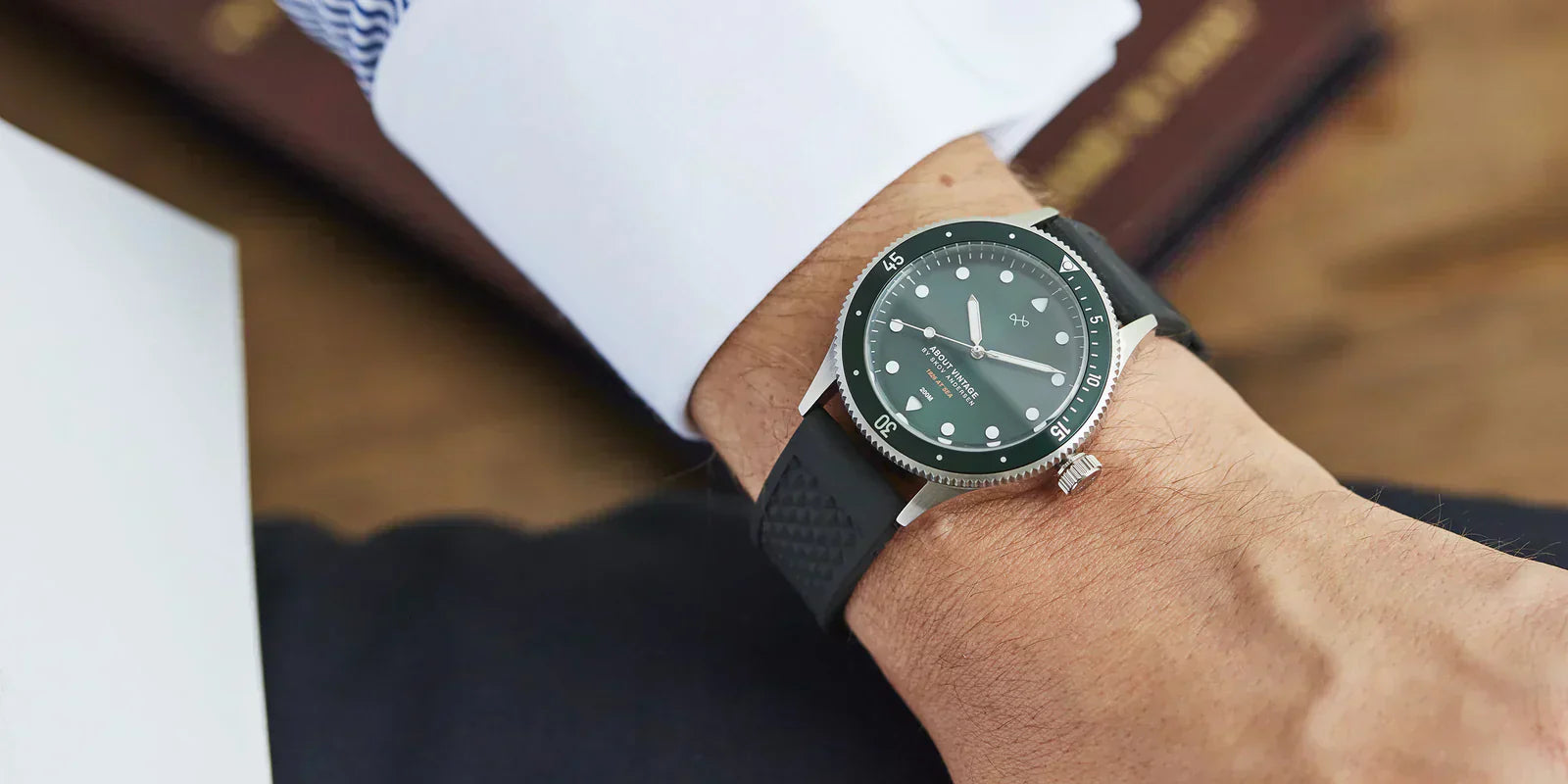
With the proliferation of the luxury watch market, distinguishing between an authentic and a counterfeit watch has become essential, especially when buying from the open market or from unverified sellers.
An authentic watch not only means higher quality, but also a real value that can be preserved or resold in the future.
In this guide from Ravilor, we'll show you the most important ways to ensure the authenticity of a watch before you buy it.
First: Verify the source.
The first step to verifying the authenticity of a watch is to know its origin.
Purchasing from an official dealer or a trusted store significantly reduces the likelihood of encountering counterfeit products.
When buying from the used market, it is important to verify the seller's reputation and history, and it is preferable to deal with entities that provide documentation or a warranty.
Second: Examining the external details
An authentic watch is characterized by high precision in manufacturing, so any minor defect can be an important indicator.
Pay attention to the quality of the engraving, the consistency of the logo, the clarity of the numbers, and the alignment of the indicators.
In genuine watches, all details are meticulously crafted, and there are no obvious flaws or irregularities in the design.
Third: The weight of the watch and the quality of the materials.
Authentic watches are often heavier due to the use of high-quality materials.
An unusually light feel or the use of flimsy materials may be a sign that the watch is not genuine.
Fourth: Clockwise movement
The type of movement plays an important role in verifying authenticity.
Genuine watches, especially automatic ones, feature a smooth and steady movement, whereas the movements in counterfeit watches may appear irregular or less precise.
Also, the sound of the movement in original watches is very quiet compared to imitations.
Fifth: Serial number
Each genuine watch has its own unique serial number.
This number is precisely engraved on the watch body and can be used to verify the watch's information and origin.
In some cases, the number can be matched with the official papers or the watch's card.
Sixth: Card and box
The presence of the original card and box enhances the watch's reliability, but it is not conclusive evidence on its own.
However, its absence may warrant further verification before making a purchase decision.
Seventh: Price
An unreasonably low price can be a dangerous indicator.
Luxury watches have a known price range, and if the price is significantly lower than the market price, it is essential to verify it thoroughly before purchasing.
When do you need an expert?
In some cases, it may not be easy to verify authenticity yourself, especially with luxury or rare watches.
Here, it is preferable to seek the help of an expert or a specialized entity to examine the watch before completing the purchase.
Ravelour's advice
When in doubt, don't rush into buying.
Take your time to verify, request additional photos or a live inspection, and confirm all details before making a decision.
Conclusion
Authenticating a watch depends on several factors, including the source of purchase, manufacturing quality, serial number, and price.
The more thorough you are in your verification, the less likely you are to encounter counterfeit products.
Do you have a watch and want to know its value or condition?
Contact the Ravilor team, and we will help you with the evaluation with the utmost professionalism.
Or
Get your watch appraised now and receive a response within 24 hours.